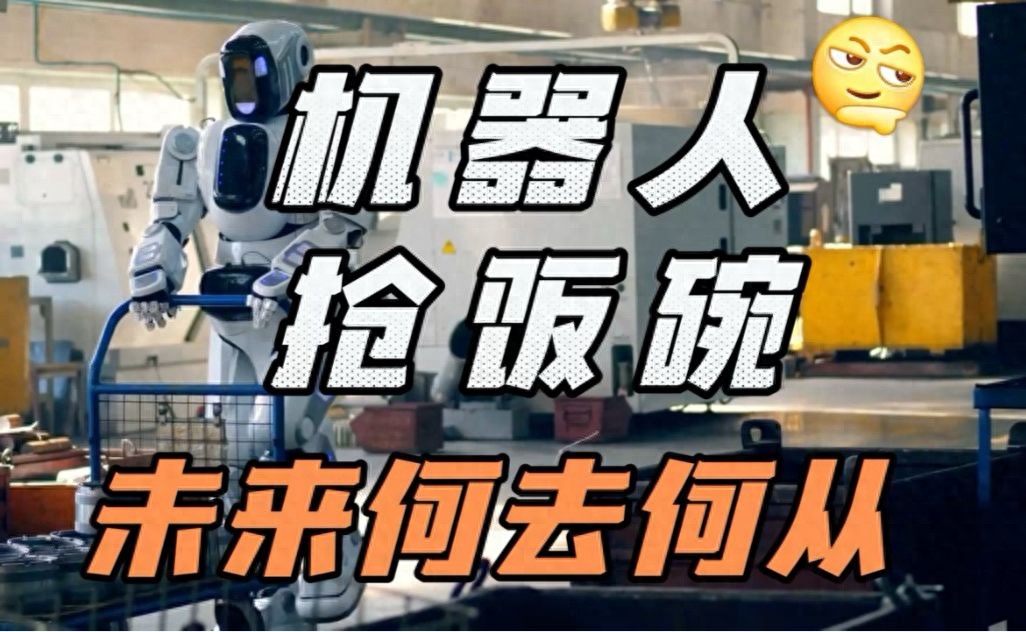
Recently, the impact of artificial intelligence and robots on job displacement has become a hot topic. Many people are concerned about when AI and robots will take their jobs. However, the focus should be on which jobs AI and robots should take over.
AI and robots should take over jobs that are “not meant for humans”—those that leave you exhausted and at risk.
Mining Jobs
First, jobs like mining for coal, which are dirty, exhausting, dangerous, and poorly paid, should be left to robots.
Have you ever seen a real coal mine? I haven’t been down one, but I’ve seen documentaries. Hundreds of meters underground, the tunnels are too low to stand up straight, and the air is filled with coal dust. Miners wear helmets, and their headlamps are their only light source, spending hours in darkness. Sweat mixed with coal dust runs down their bodies. The worst part is that they don’t know when the rock above them might collapse or when gas might explode.
In 2019, a coal mine accident trapped 22 people; 11 were rescued, and 11 died. Who were those 11? They were someone’s sons, husbands, and fathers. Such incidents are not rare.
Shouldn’t robots be doing this work? Current mining robots can be remotely controlled, allowing operators to control equipment from an office as if playing a video game. They can autonomously excavate and accurately detect mineral veins better than human eyes. They can also monitor gas concentrations in real-time and alert when levels are dangerous, without waiting for miners to notice—many miners’ noses are already clogged with coal dust.
The technology exists, so why are humans still going underground? The answer is simple: cost. Human labor is cheap. A miner earns a few thousand a month, while a robot can cost hundreds of thousands. On paper, human labor seems cheaper, but isn’t a human life worth more than that?
We praise miners for their selfless dedication while continuing to send them underground to risk their lives for money. This is unacceptable. Robots should take over these jobs, not because miners can’t do them, but because they do them too well—so well that we feel justified in saying, “Someone is doing it, so why spend money on machines?”
This logic is no different from landlords in the old days comparing the cost of labor to that of oxen.
Firefighting Jobs
Next, let’s talk about firefighters. Every time I hear about a firefighter’s sacrifice, I feel like throwing my phone in anger—not at the firefighters, but at those of us who stand by and do nothing.
In 2019, during a forest fire in Sichuan, 30 firefighters lost their lives, the youngest being just 18. In 2020, another 19 died in Liangshan.
Did they know they might not come back? Yes. So why did they go? Because people were waiting to be rescued, and it was their duty.
But in an age of advanced AI and robotics, I want to ask a cold and politically incorrect question: Why?
We already have firefighting robots that can spray water, scout, and withstand temperatures of up to a thousand degrees. They don’t tire, fear, or get lost in smoke. They won’t leave behind grieving parents.
Why are we still relying heavily on human firefighters? Two reasons: first, robots are expensive, costing hundreds of thousands, which isn’t affordable for many fire stations; second, there’s a mindset that machines are unreliable compared to humans.
If robots are too expensive, we should leverage China’s manufacturing strengths to reduce their costs. If machines are deemed unreliable, we should improve their reliability. I’m not advocating for robots to completely replace firefighters but to lead in the most dangerous rescue scenarios, significantly reducing the risk to human lives.
We need to calculate the costs clearly. In a major fire, the loss of a firefighting robot could prevent the sacrifice of several firefighters. The value of those lives far outweighs the cost of a robot.
Such a “job takeover” by robots can save lives and prevent firefighter casualties.
High-Rise Window Cleaning Jobs
Have you noticed the “spider men” who clean windows? On nice days, if you walk by a CBD, you might see someone hanging from a tall building, secured by just two ropes, cleaning windows with a squeegee. Their skill is impressive but heartbreaking—they know that a slight misstep could cost them their lives.
This is no joke. Many small companies don’t even provide proper safety harnesses, and workers sign agreements taking on their own safety risks for a few extra bucks.
You might say this job, while relatively high-paying, is inhumane. Shouldn’t robots handle it?
Window-cleaning robots exist. Drones equipped with spray nozzles can quickly clean windows, and the technology is as mature as your home vacuum robot. The only difference is that the vacuum cleans your floor, while the window-cleaning robot cleans skyscraper glass.
So why are we still using “spider men”? Because some people think the cost of robots is too high, while human labor is relatively cheap.
If a human life is valued less than the price of a window-cleaning robot, then something is wrong in our society.
Hazardous Jobs
Now, let’s discuss extreme cases. In 1986, during the Chernobyl disaster, the Soviet Union sent hundreds of thousands of “liquidators” to handle the radiation. They were called “biological robots”—a tragically ironic term. They lacked adequate protective gear and used their bodies to shovel graphite and cover the reactor.
What happened to them? Many developed radiation sickness, cancer, and had children with deformities. Their lives burned out like candles.
Some might say that was a special time with limited technology. But in 2011, during the Fukushima disaster, Japan sent people to repair the damage. Many were elderly, not because of their experience, but because they had little time left to live due to the cancer risk from radiation.
This statement is chilling.
Today, we have radiation detection robots, cleanup robots, and cutting robots. Why are we still sending humans into these hazardous environments? The answer is cost.
Bomb Disposal Jobs
Bomb disposal experts look heroic in movies, but in reality, they are risking their lives. Wearing heavy protective suits, they approach unknown explosives, which could detonate at any moment. While the suits can shield against shrapnel, they can’t protect against shockwaves. If an explosion occurs, a person might appear intact but suffer severe internal injuries.
Every year, how many bomb disposal experts are injured or killed? I won’t mention the statistics; it’s too painful.
Bomb disposal robots have existed for decades. In military and police operations, they can be remotely operated to defuse, cut, or relocate explosives. An operator can control them from hundreds of meters away, minimizing human risk.
Shouldn’t this job be handed over to robots?
Conclusion
The jobs I’ve discussed—mining, firefighting, window cleaning, radiation cleanup, and bomb disposal—share a commonality: they are not tasks humans excel at. In fact, they are the very tasks humans struggle with the most.
We are not good at enduring long hours in dark mines, breathing in extreme heat, working at dizzying heights, or surviving radiation exposure.
So why are we still doing them? Is it because the technology isn’t mature? No, it’s mature. Is it because the cost is too high? Also no—how much is a human life worth?
In some people’s accounting, human lives are too cheap.
This is a harsh truth, but it’s necessary to say. Robots should take over these jobs that treat humans as expendable. The cleaner the takeover, the better for society. This means a miner can operate machinery from an office instead of inhaling coal dust underground; a firefighter can command robots from a safe distance instead of rushing into flames; a window cleaner can supervise robots instead of risking their life.
This “robot takeover” is a redemption for humanity. It returns dangerous, inefficient, and inhumane jobs to machines. Machines don’t fear pain, death, or toxicity. These dirty, exhausting, and dangerous jobs are inherently suited for them.
If we can’t understand this, it means the ones who should be eliminated are not the miners, firefighters, or window cleaners, but those who still calculate costs based on the cheapness of human life.
Let machines handle danger and leave humans to live their lives—that is the true purpose of AI and robots.
Comments
Discussion is powered by Giscus (GitHub Discussions). Add
repo,repoID,category, andcategoryIDunder[params.comments.giscus]inhugo.tomlusing the values from the Giscus setup tool.